 Teamlio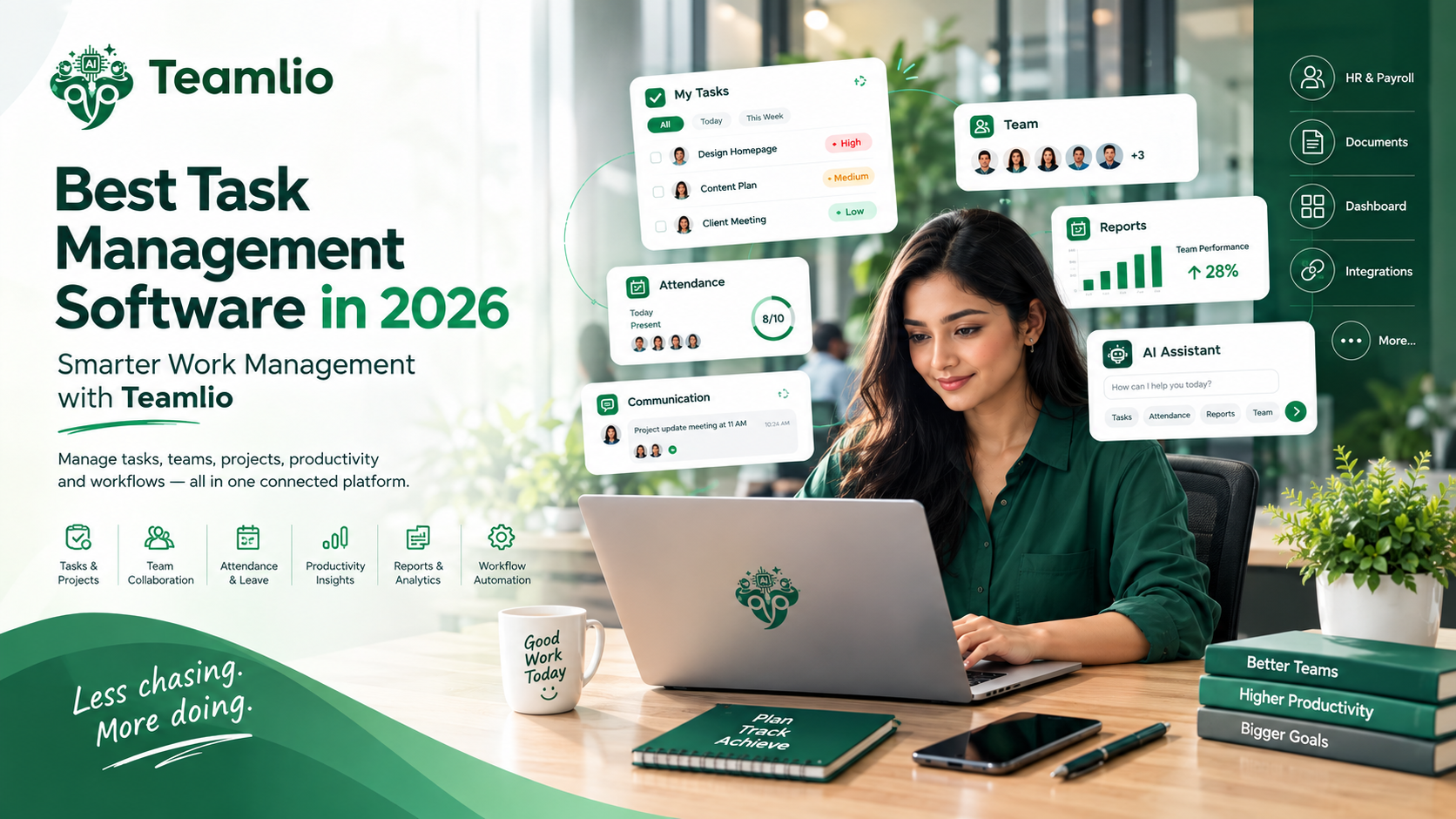
In 2026, getting work done is no longer just about working harder. Businesses are managing multiple projects, remote and in-office teams, changing priorities, tight deadlines, customer requirements, internal communication, and an increasing number of digital tools. When work is spread across emails, spreadsheets, chat applications, personal notes, and separate software, even a simple task can become difficult to track. This is where the best Task management software in 2026 can make a meaningful difference by bringing tasks, people, deadlines, projects, and progress into one organized workspace.
Modern businesses need more than a digital to-do list. They need a system that helps employees understand what needs to be done, managers understand who is responsible, and business owners understand how work is progressing. Task management software in 2026 is therefore becoming an important part of everyday business operations, helping organizations replace scattered work processes with a more connected and transparent approach.
Why Businesses Need Task Management Software in 2026
Imagine a manager assigning a task to an employee through WhatsApp in the morning. A few hours later, another task arrives through email, the deadline is discussed during a meeting, and an important document is sitting inside a separate drive. By the afternoon, the manager wants an update but has to ask employees individually because there is no single place showing the current status of the work.
The employee may be working perfectly well, but the business still lacks visibility.
This is one of the biggest problems that modern task management solves. Instead of asking, “Where was this task discussed?” or “Who is working on this?”, businesses can have a centralized system where responsibilities, deadlines, priorities, and progress remain visible.
The purpose of Task management software in 2026 is not simply to create more digital checklists. It is to make everyday work easier to organize, execute, monitor, and improve.
What Makes the Best Task Management Software in 2026?
The best Task management software in 2026 should fit naturally into the way a team works. Employees should be able to understand their responsibilities without spending unnecessary time learning a complicated system, while managers should have enough visibility to monitor projects and identify delays.
A useful task management platform allows teams to create tasks, assign responsibilities, set deadlines, define priorities, monitor progress, and keep important information connected to the work. Instead of relying on memory or repeated follow-ups, employees can clearly see what needs their attention and managers can understand what has been completed, what is in progress, and what still requires action.
But task management should not stop at individual assignments. Business work is interconnected. A task may depend on another employee, a project deadline, a document, a conversation, an approval, or a recurring workflow. This is why businesses increasingly need task management solutions that connect everyday work rather than keeping every activity inside a separate application.
From Task Management to Complete Work Management
There is an important difference between managing tasks and managing work.
Task management focuses on questions such as, “What needs to be done?” and “Who will do it?” Work management goes further by connecting the task with the people, project, communication, workflow, productivity, and business information surrounding it.
For example, a marketing campaign may involve a content writer, designer, marketing manager, sales team, deadline, approval process, customer information, and performance report. Treating every activity as an isolated task can make the process difficult to follow. A connected work-management system can bring these activities into one organized environment.
This approach is especially useful for growing businesses where multiple departments are working simultaneously and managers need a clearer view of overall operations.
Why Affordable Work Management Software in 2026 Matters
For startups and growing businesses, choosing software is not simply about finding the cheapest monthly subscription. The real cost can come from managing too many disconnected tools.
A business may use one application for tasks, another for employee management, another for attendance, another for communication, another for reports, and spreadsheets for everything that doesn't fit anywhere else. Each individual tool may appear affordable, but the combined cost, training requirements, data duplication, and constant switching between platforms can become expensive over time.
That is why affordable Work management software in 2026 should be evaluated based on the overall value it provides rather than only its subscription price. A platform that brings multiple everyday business processes together can help reduce software dependency while giving employees and managers a more consistent working environment.
Affordability should also mean simplicity. If employees need extensive training before they can create or update a task, the software may create another layer of work instead of reducing it.
Teamlio: Connecting Tasks, Teams and Productivity
Teamlio takes a broader approach to task and work management by connecting everyday business operations within one platform. Instead of treating task management as an isolated feature, Teamlio brings together tasks, projects, employee management, attendance, productivity, communication, reporting, documents, and workflows.
With Teamlio, a manager can organize work while keeping the wider team environment connected. Employees can understand their responsibilities and work priorities, while managers can get greater visibility into ongoing activities and performance.
The idea is simple: your team should spend time completing work, not searching across different applications to understand it.
This connected approach can be particularly valuable for startups, SMEs, and growing organizations that want to create more structured workflows without building a complicated collection of software tools.
Make Every Task More Accountable
A task without ownership is simply an idea.
When a task has a clear employee, deadline, priority, and status, it becomes actionable. This small difference can have a major impact on workplace accountability.
For example, instead of sending a message saying, “Please complete the client report soon,” a manager can create a clearly defined task with the required information, assign it to the responsible person, establish a deadline, and monitor its progress. The employee knows what is expected, while the manager does not have to repeatedly ask for updates.
This reduces unnecessary follow-ups and creates a more organized working environment.
Reduce the “What’s the Status?” Problem
One of the most common conversations inside businesses is also one of the simplest:
“What's the status of this task?”
When work is scattered, managers have to ask employees for updates manually. Employees then spend time responding to status requests instead of focusing on their actual responsibilities.
A centralized task management system changes this process. When task statuses are regularly updated, managers can get a clearer picture of progress without interrupting employees for every small update.
This is where task management becomes more than productivity software. It becomes a source of operational visibility.
Task Management and AI: A Smarter Combination
AI is changing how businesses approach productivity, but simply adding AI to a workplace does not automatically make work better. The real value comes when AI is connected to useful business information and everyday workflows.
Modern AI-powered work environments can help teams summarize information, find relevant data, identify patterns, automate repetitive processes, and make business information easier to access.
Teamlio extends this idea through its AI capabilities, helping businesses interact with workplace information and gain useful insights without manually searching through multiple sources.
The goal should not be to add another AI tool for employees to manage. The goal should be to make existing work easier.
More technology should mean less unnecessary work—not more complexity.
A Better Way to Manage Daily Work
Consider a typical employee's day. They may have several tasks to complete, meetings to attend, messages to answer, documents to review, attendance to record, and deadlines to manage. If every part of that day is handled through a different application, productivity can quickly become a battle against context switching.
A connected platform provides a different experience. Tasks can exist alongside employee information, communication, productivity data, documents, and business reports. Instead of moving between disconnected systems, employees can work within a more unified environment.
This is particularly important for managers. When information is centralized, they can spend less time collecting updates and more time making decisions.
Who Can Benefit from Task Management Software?
Task management software can be valuable for almost any organization where multiple people need to coordinate work. Startups can use it to establish structured processes as they grow. SMEs can use it to improve accountability across departments. Marketing teams can organize campaigns and content production, while sales teams can manage follow-ups and activities. HR teams can coordinate recruitment, onboarding, employee documentation, and internal processes. Operations teams can manage recurring workflows, approvals, and day-to-day responsibilities.
The value comes from creating one clear environment where work can be organized and understood.
Choosing Task Management Software in 2026
Choosing the right platform should begin with the problems your business is trying to solve. A company that only needs a simple personal checklist may not need a full work-management platform. However, businesses managing employees, projects, workflows, communication, productivity, and reporting may benefit from a more connected solution.
Ease of use should be an important consideration because software only creates value when people actually use it. Businesses should also consider whether the platform can grow with their teams, whether it provides meaningful reporting, whether it can automate repetitive processes, and whether it can connect different areas of everyday work.
Most importantly, the software should reduce operational friction rather than create another layer of administration.
The Future of Work Is Connected
The future of task management is moving beyond simple lists of completed and pending activities. Businesses need to understand not only what work needs to be done, but also who is doing it, how it is progressing, where bottlenecks are appearing, and how the overall workflow can be improved.
AI, automation, analytics, communication, and employee productivity can all contribute to this transformation. But their real value appears when they work together.
That's the philosophy behind Teamlio.
Instead of giving businesses another isolated task application, Teamlio brings essential workplace functions into one connected platform so teams can manage work with greater clarity and businesses can gain better visibility into their operations.
Final Thoughts
Finding the best Task management software in 2026 is not about choosing the platform with the longest feature list. It is about finding a solution that helps your team organize responsibilities, improve accountability, reduce repetitive follow-ups, and understand work more clearly.
For businesses searching for Task management software in 2026, the right platform should make everyday work simpler rather than adding another complicated system.
And for organizations looking for affordable Work management software in 2026, Teamlio provides a connected approach where tasks, teams, productivity, attendance, communication, reporting, documents, and workflows can work together.
Because productivity isn't about adding more tools.
It's about making the tools you use work better together.
Teamlio — Manage Work. Connect Teams. Grow Smarter. 💚