 Teamlio
Running a small business means wearing many hats. One moment you are closing a deal, the next you are calculating leave balances or chasing a signed offer letter. As your team grows, these manual HR tasks quietly eat up hours that should go into growing the business. This is exactly where HR software for small business makes a real difference.
What Is HR Software for Small Businesses?
HR software for small businesses is a digital platform that brings your people-related tasks into one place. Instead of juggling spreadsheets, WhatsApp messages and paper files, you manage employee records, attendance, leave, payroll and hiring from a single dashboard. A small business HRMS (Human Resource Management System) goes a step further by connecting these functions, so data entered once flows everywhere it is needed. The result is fewer errors, faster processes and a much better experience for your employees.
Why Small Businesses Need an HRMS
Many founders believe HR software is only for large companies with big HR departments. In reality, small teams benefit even more, because they have fewer people to handle admin work. A good small business HRMS saves time by automating repetitive tasks, reduces costly payroll and compliance mistakes, and keeps employee data secure and organised. It also gives employees self-service access to their payslips, leave balances and documents, which means fewer interruptions for you and your managers. Over time, this builds a more professional and transparent workplace, which helps with employee retention.
Key Features to Look for in HR Software for Small Business
Not every tool fits every team, so it helps to know what matters most. The core features to look for are:
Employee database: a centralised, secure record of every team member.
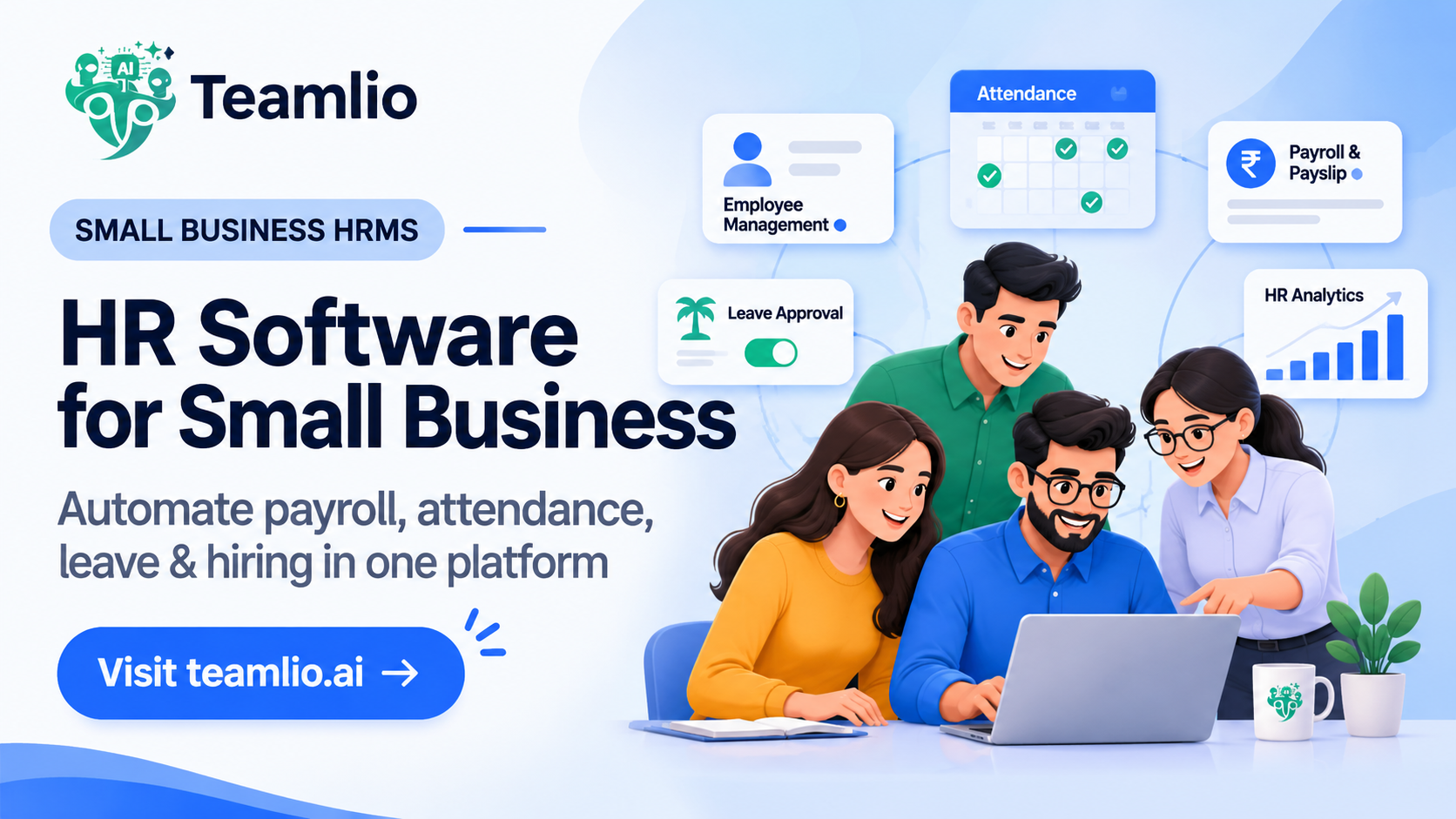
Attendance and leave management: automated tracking, approvals and balances.
Payroll processing: accurate salary calculations, deductions and payslips.
Recruitment and onboarding: simple workflows to hire and welcome new joiners.
Reports and analytics: clear insights into headcount, attrition and costs.
Beyond features, look at how easy the software is to use. If your team needs weeks of training, adoption will suffer. The best HR software for small businesses is simple, intuitive and quick to set up.
How to Choose the Right Small Business HRMS
Start by listing the HR tasks that take up most of your time today. Is it payroll, attendance tracking or hiring? Choose a small business HRMS that solves those problems first and lets you add more modules as you grow. Next, check pricing carefully. Small businesses need transparent, scalable plans without hidden costs. Also make sure the platform offers good customer support, mobile access and strong data security. Finally, take a demo or free trial before committing, so you can see how the software works with your real day-to-day workflows.
Benefits of Using HR Software for Small Business
The biggest benefit is time. When attendance, leave and payroll are automated, your team stops doing manual admin and starts focusing on work that grows revenue. You also gain accuracy, since automated calculations remove the human errors that often creep into spreadsheets. Compliance becomes easier because records are stored properly and are always accessible. Most importantly, you get better visibility into your workforce, so you can make confident decisions about hiring, budgeting and team performance.
Final Thoughts
As your business grows, HR complexity grows with it. Adopting HR software for small business early saves you from messy processes later and sets a strong foundation for scale. Whether you have 5 employees or 150, the right small business HRMS can turn HR from a daily headache into a smooth, automated system that works in the background.
Ready to Simplify HR for Your Business?
Stop losing hours to spreadsheets and manual follow-ups. Discover how Teamlio can help you manage your people, payroll and processes in one smart platform built for growing teams.
👉 Visit teamlio today and see how easy HR can be.